
35mm Film Wedding Photography

Wedding photography journal
Why I still shoot analogue alongside digital — and why my couples love it.
In a world where every phone is a camera and digital storage is essentially limitless, choosing to load a roll of 35mm film into a mechanical camera body might seem like an odd decision. But for me, it’s one of the most creatively rewarding things I do at a wedding. I offer 35mm film wedding photography as an add-on to every digital package — there is a full page on how it works, what it costs and which stocks I shoot.
Film forces you to slow down. There are no instant previews, no rapid-fire bursts, no deleting and reshooting. Every single frame counts. That constraint changes the way you see — you become more deliberate, more present, more attuned to the light and the moment unfolding in front of you. The result is a set of images that feel different from anything digital can produce: softer, richer, and unmistakably real.
The resurgence of film photography isn’t driven by nostalgia alone. Photographers and couples alike are drawn to the unique aesthetic — the organic grain, the way colours render on emulsion, the tonal depth that digital sensors still struggle to replicate. There’s a tangible, handmade quality to film that feels perfectly suited to something as meaningful as a wedding day.

Where it all started
My journey with film
I still vividly remember my first experience with a camera at the age of ten — a Konica Minolta 7000 that belonged to my grandmother. I was at Brands Hatch, photographing cars hurtling around the circuit, and the anticipation of waiting a week for the developed prints is something that has never left me. Not every shot was sharp, but they all had a charm and character that I’ve spent years trying to understand.
I remember the thrill of developing my first roll in the darkroom — watching an image slowly materialise under the red safelight, detail emerging from nothing. The whole process felt like magic. It demanded patience and an unwavering commitment to learning the craft, and it shaped the way I approach photography to this day.
What sets film apart is something hard to put into words. It’s the way highlights roll off instead of clipping. It’s the way skin tones glow. It’s the depth and dimension that comes from light hitting a physical emulsion rather than a digital sensor. Each frame carries a weight and intention that feels entirely different from a digital capture.
The tools of the trade
My film cameras


My go-to film cameras are the Nikon F100 and the Fujifilm Klasse . I have a slight preference for the Klasse — there’s something about its simplicity and elegant design that suits the way I like to work: quietly, unobtrusively, letting moments happen.
For black and white, I load Fujifilm Neopan Acros 100 II — it produces beautifully fine grain with rich tonal range that complements my digital monochrome work using the Fujifilm Acros film simulation. For colour, I rely on Kodak Portra 400 , which renders warm, natural skin tones and handles mixed lighting beautifully. Together, the two films give me everything I need to tell your story on emulsion.
“Film forces you to slow down, to be present, to trust your instincts. Every frame carries a weight and intention that feels entirely different from a digital capture.”
The analogue difference
Why film works so well at weddings
Weddings are full of fleeting, unrepeatable moments — and film captures them with a quality that feels perfectly matched to the emotion of the day. The organic grain adds texture and atmosphere. The colour palette is warm and timeless rather than clinical. And because each roll only holds 36 frames, every press of the shutter is intentional.
I offer 35mm film as an add-on to my digital packages , and it works beautifully alongside my Leica Q3 work. The film images aren’t meant to replace the digital gallery — they complement it, adding another layer of storytelling with a different feel and texture. Many of my couples tell me the film shots end up being their absolute favourites.
Whether it’s a quiet moment during bridal prep, the light pouring through a church window, or the chaos of the dance floor late at night — film brings something special to each of those scenes. It’s not about being retro for the sake of it. It’s about using the right tool to tell your story in the most beautiful way possible.
Where it earns its keep most is in buildings with real character and real light. The vaulted nave at the Mount Without in Bristol, the antique-filled rooms at Brunswick House in Vauxhall, the tall Edwardian windows at Old Marylebone Town Hall and the register office light at Chelsea Old Town Hall all suit Portra far better than they suit a sensor. There is a full set of venue guides if you are still deciding where to get married.
Shot on 35mm film
Wedding film favourites
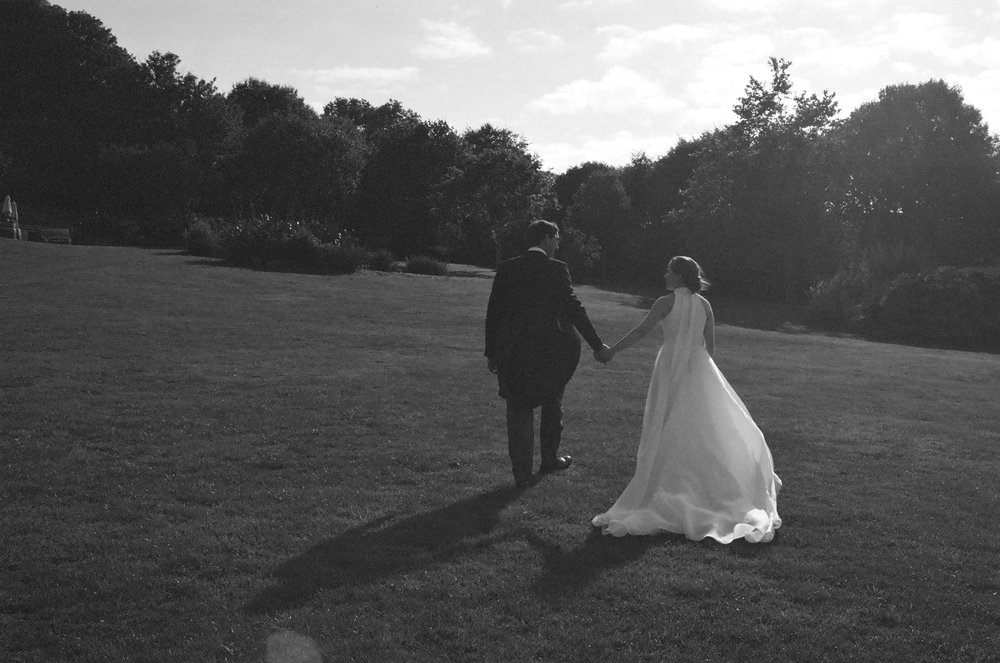
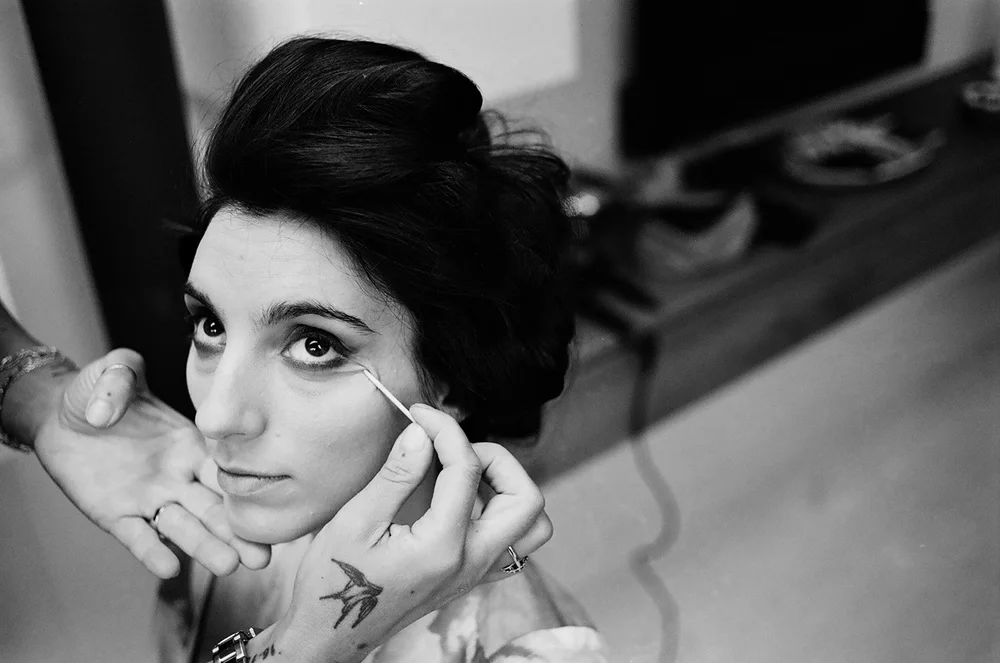
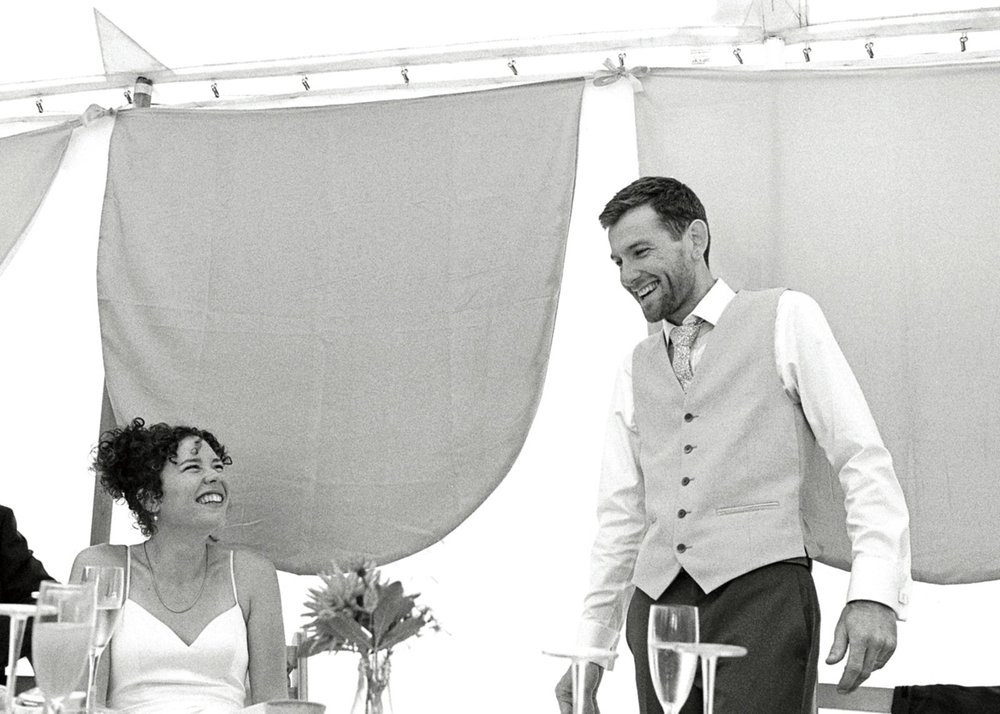
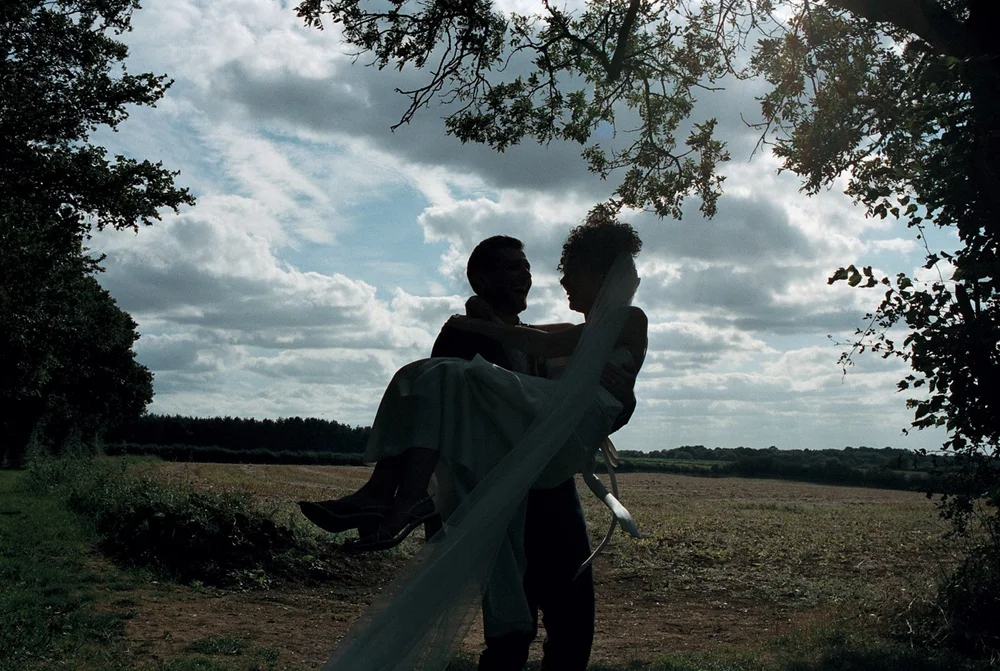
A collection of my favourite wedding photographs captured on Kodak Portra 400 and Fujifilm Neopan Acros 100 II.






Add film to your wedding
Interested in 35mm film?
I offer a film add-on alongside all of my digital wedding photography packages. Get in touch and I’ll tell you everything you need to know, or read the full film wedding photography page first.
I photograph weddings across Bristol and London, from full weekends to micro weddings.
Ready to get started?
Let’s make it happen
Get in touch with your wedding date and venue, and I’ll check my availability. I’d love to hear all about your plans.